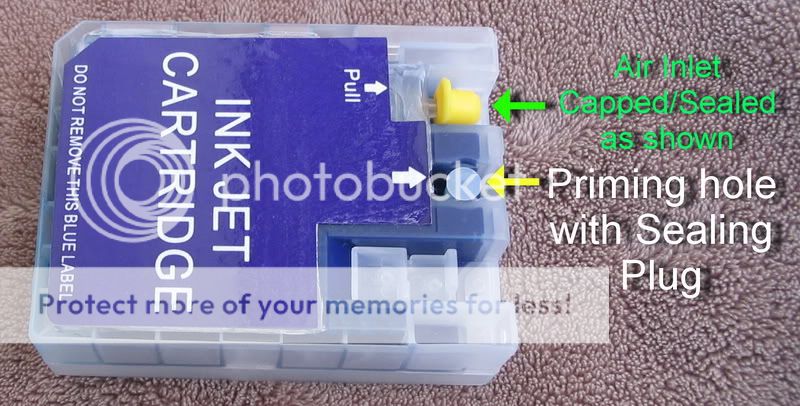
Inkjetfly Epson Pro 3800/3880 Big Foot refillable system
Recently Leo Chang (Inkjetfly.com) contacted me to test their latest refillable cartridge system (Big Foot) for the Epson Pro 3800/3880 printer, replacing their older bag based cartridges with resetter.
I had similar cartridges tested from efillink.com, who ask me about the test them, because they were finding out which cartridge system would be the best. Despite their similar design to the original OEM carts, the construction quality was suboptimal. The way these cartridges had to be refilled combined with the material (rubber) of the refill hole/ink outlet hole, makes me wonder how well these carts will last, since with my first carts I tested a few years ago with the same rubber ink outlet hole valve I had a disastrous leak from one of the cartridges, as the rubber material of the ink outlet valve ruptured and instead of pumping the ink into the CISS piping system of the printer, the ink flooded the inner side of the printer, making it a complete mess.
The repeated insertion and extraction to refill these bag based carts through a rubber inlet valve will put extra stress on this easily deteriorating material much heavily (rubber easily will rupture after time due to material fatigue and oxidation, similar to rubber elastics tearing apart and rupturing after a certain period).
Now back to these Big Foot Pro 3800/3880 refillable cartridges. There is also a smaller Small foot version of the cartridges, not requiring you to remove the cartridge cover and these will be reviewed by Irv Weiner (a member of the nifty-stuff.com and dpreview.com websites).
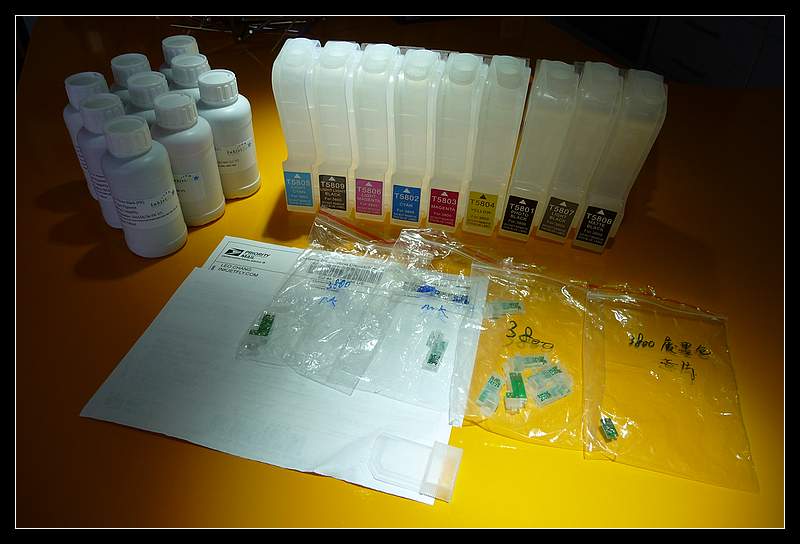
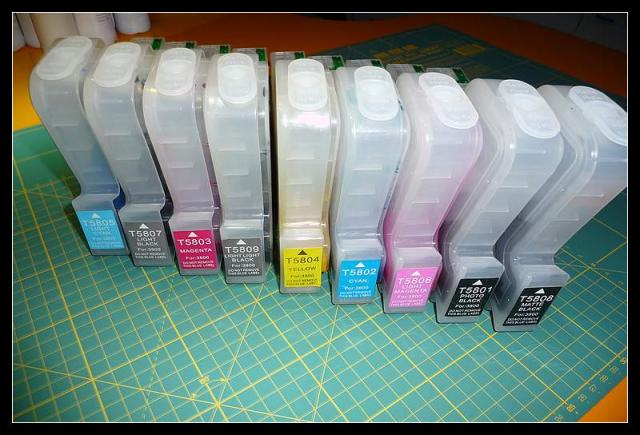
The system consists of the following items:
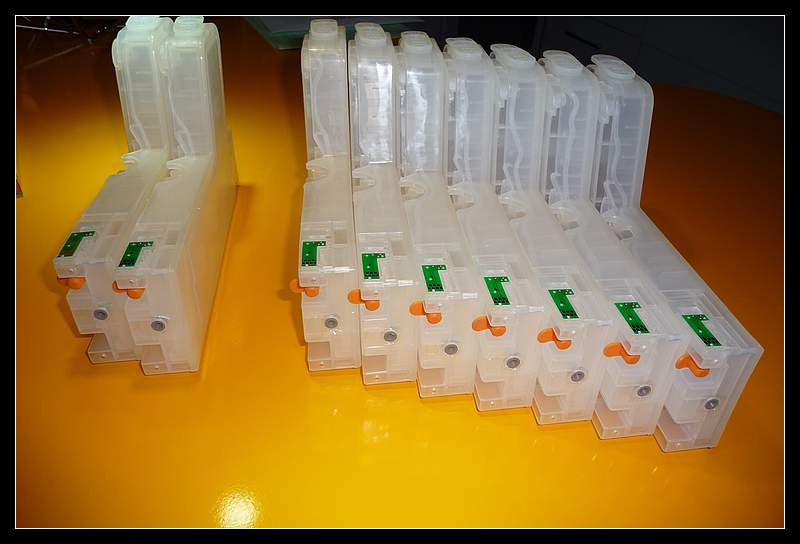
-9 very large cartridges (gun-shaped) with a easy to open refill hole (made of silicone presumably)
-7 dummy chips
-2 tuning chips with need the original PK and MB chips (you will need only these 2 ones)
-1 resettable maintenance chip replacement
-a plastic key to simulate closing of the ink cover
-Inkjetflys own proprietary IMA24/36 K3 pigment ink set.
-manual (rather basic though)
Above picture shows the package with the 2 tuning chips, 7 dummy chips working together with the 2 tuning chips and 1 resettable maintenance cartridge chip (waste ink tank).
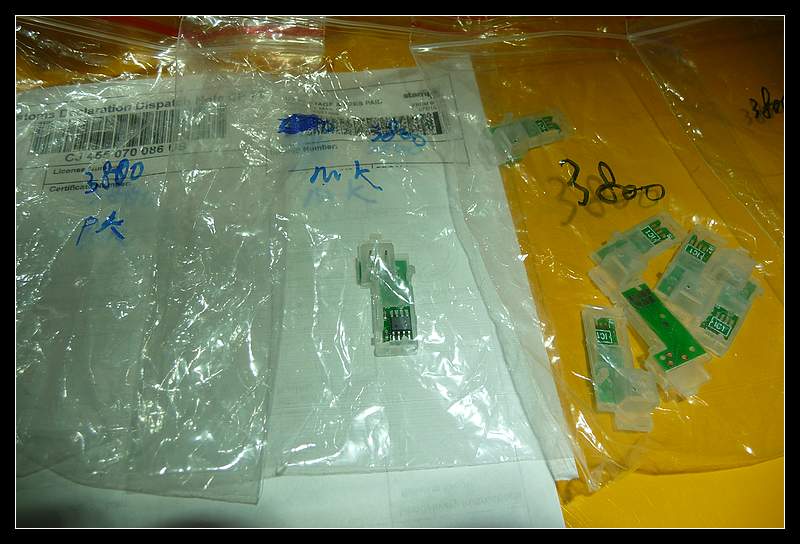
The 2 tuning chips have 3 pins underneath them to make contact with the original OEM chip to be functional. This is a very good concept: maybe in the future the manufacturer could attach the OEM chips on 2 of those tuning chips, thus making it more interesting for those not having these OEM as they might have thrown away the old cartridges. The Inkrepublic Pro 3800/3880 I-refill system also has two tuning chips as well, but still needs the other 7 original OEM chips to function. The whole chipset will always stay full and it is by visual inspection you should refill the cartridges when time comes. I am not sure this is good idea for the maintenance tank. The Inkrepublic I-refill system maintenance tank chip can only reset back to empty (or 100 %) when the chips register as empty, even though you can reset cartridge chip back to full every time. I think this a safeguard forcing you to check the maintenance tank and replace the absorption material when it really gets full. Staying full all the time can be dangerous, when one do not check the maintenance tank on a regular base to prevent overflowing. Since both cartridge systems are transparent or semi-transparent you can visually check physical ink level at any time, so staying full electronically is not a big problem in this case.
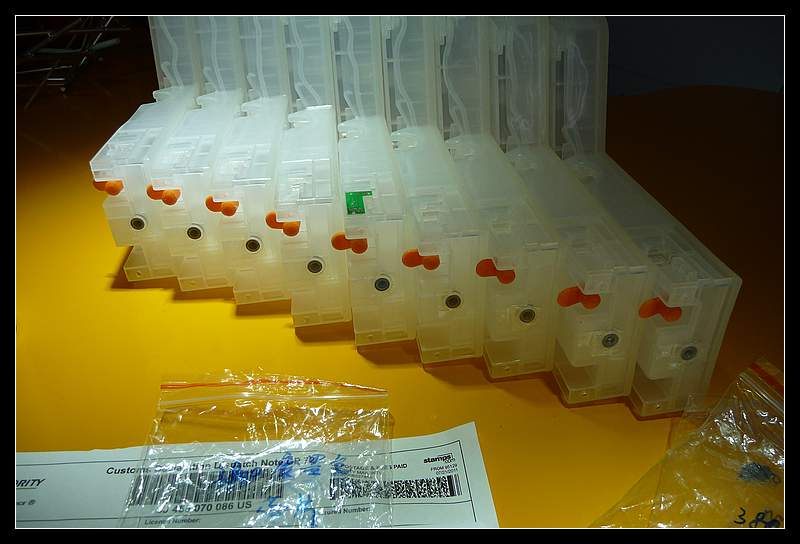
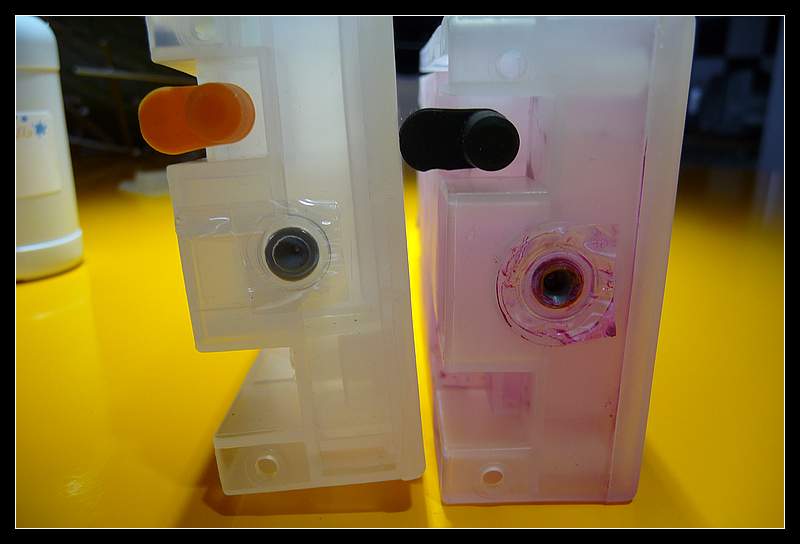
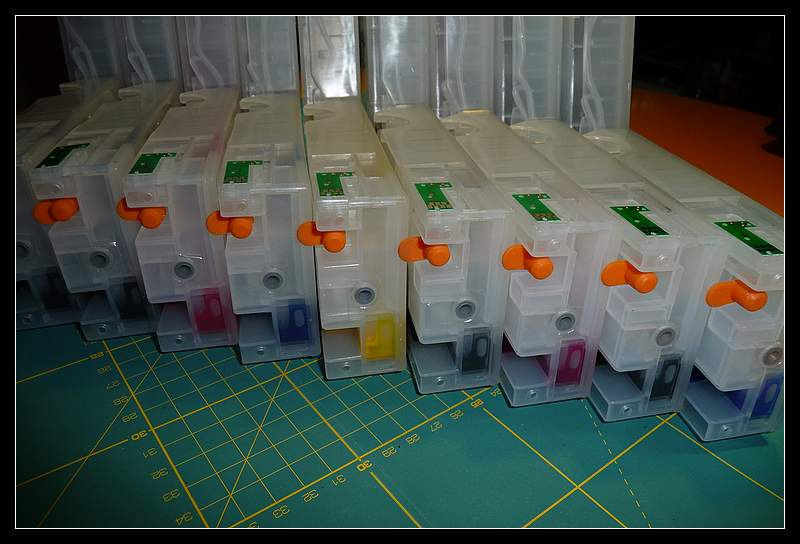
Now the front side of these gun shaped cartridges: unfortunately the material is still rubber. I was hoping Inkjetfly would have the ink valve replaced with a more sturdy material, like the original OEM carts and the Inkrepublic I-refill system.
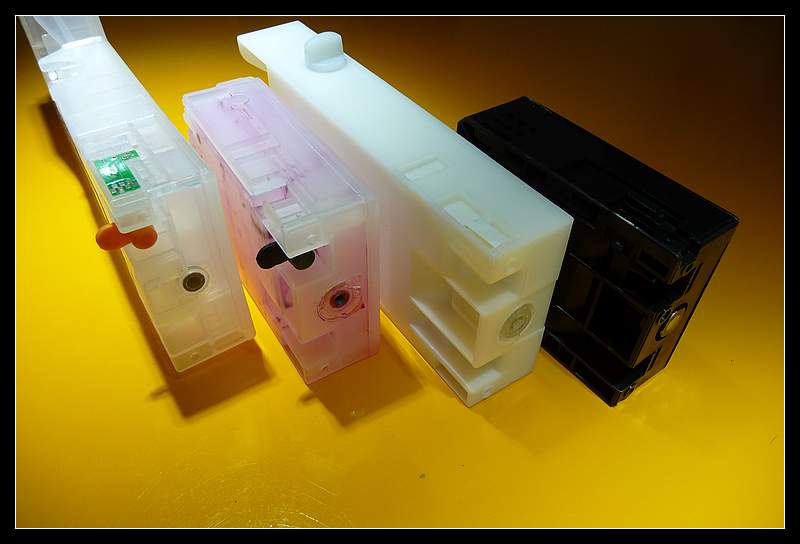
Above picture shows 4 types of refillable cartridges now available on the market for the Epson Pro 3800/3880. From left to right: Inkjetfly Big Foot, Colordroplets, Inkrepublic I-refill, Efillink.com (similar to the older bag-based Inkjetfly system).
As you can see: same flimsy rubber ink outlet valve like my older first version carts. Fortunately the system does not need removing as the chips will always show full all the time now, so it should last much longer without any ill effect., so it should last much longer without any ill effect.
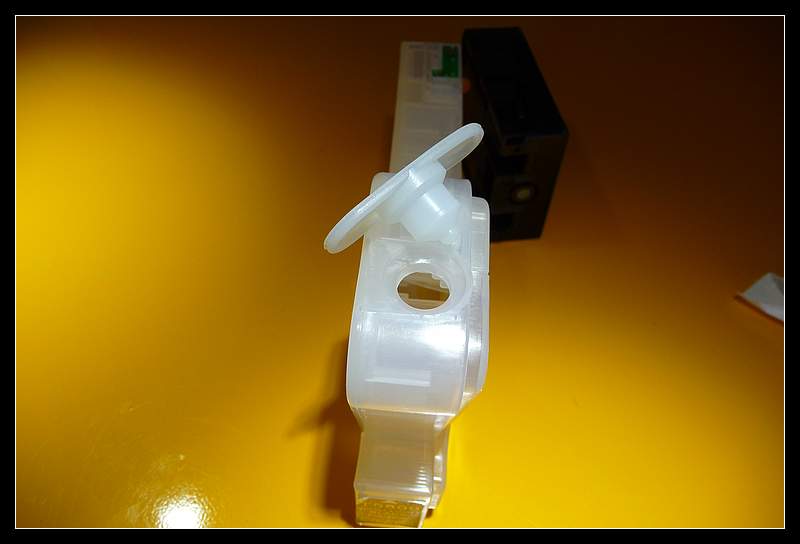
The refill hole of these cartridges are very easily opened and refill is easier compared to the Inkrepublic.com I-refill system. The stopper is made of silicone rubber: a material they should have used to create the ink outlet valve.
Above: left the two PK and MB carts with tuning chip with OEM chips and right the seven other cartridges with only a dummy chip. A very clever system indeed and much easier for the end user, then having 7 or 9 original chips installed from the original carts, which might been already through away by the end user.
So all the cartridges have been filled by me and sealed.
Do not forget to remove the orange stopper covering the pressure inlet valve before installing them into your printer.
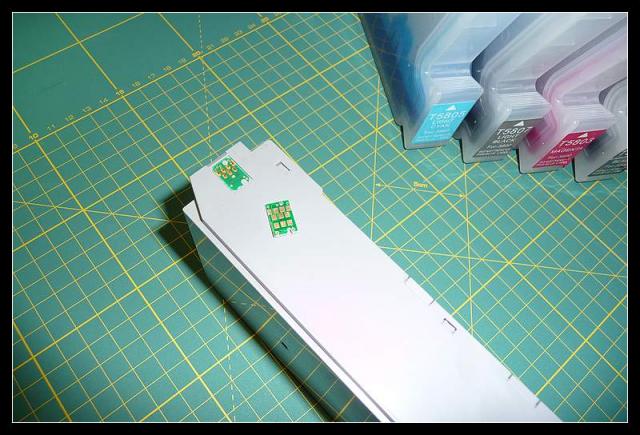
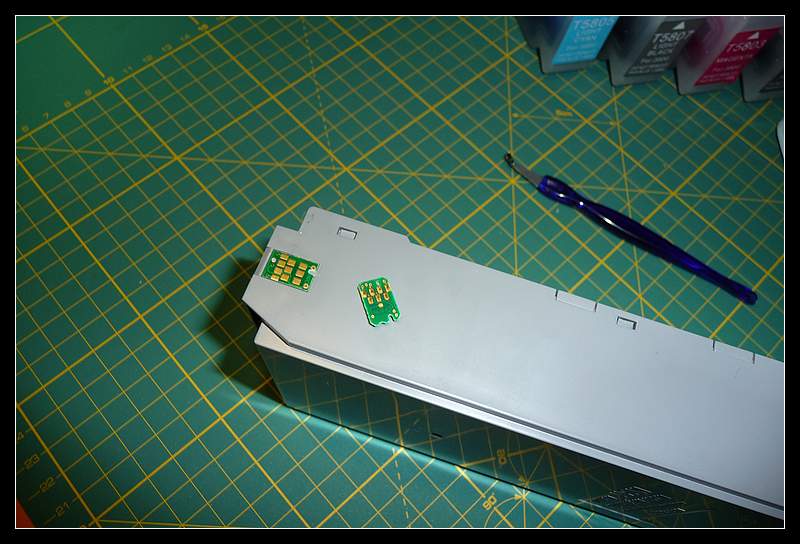
The maintenance tank with the resettable maintenance tank chip side by side. You will have to replace the original chip with this one to have the maintenance tank be become auto resettable.
I use this particular nail cutter to cut off the plastic contacts attaching the chip on the maintenance cartridge. So after tweaking the maintenance tank looks like this, with the original chip now replaced by this special chip.So after tweaking the maintenance tank looks like this, with the original chip now replaced by this special chip.
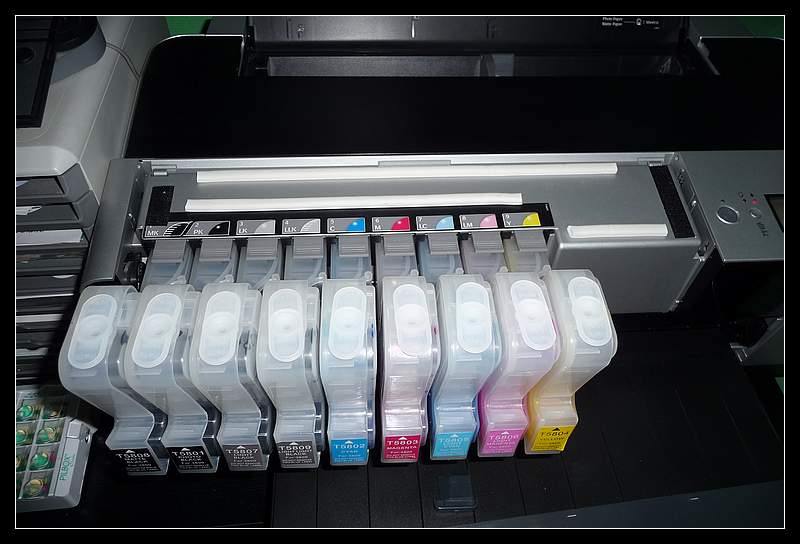
The cartridges now installed into the printer. I think the cartridges are a bit too large for me. Much bigger and larger compared to the already extra size Inkrepublic I-refill system.
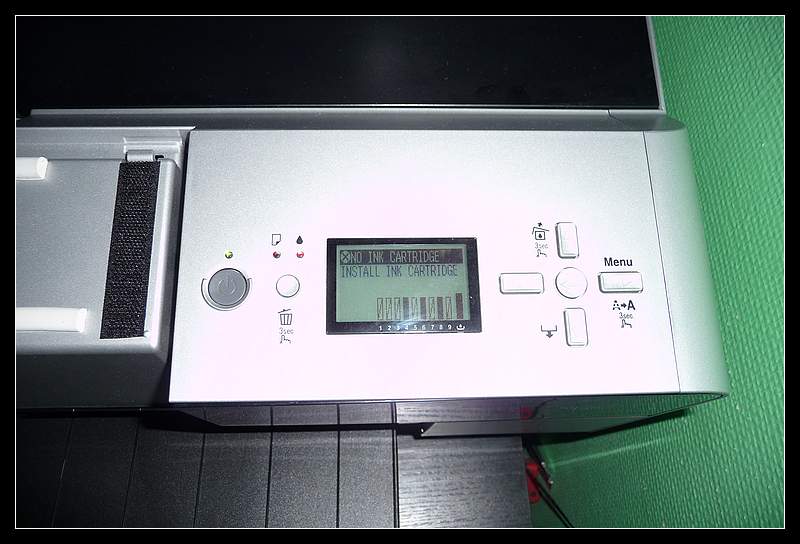
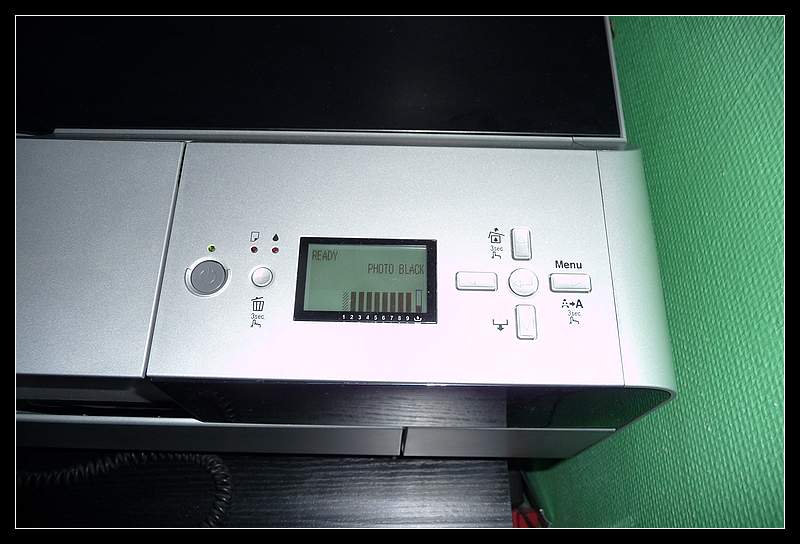
The first problem with the system: It can only detect 3 of the cartridges installed and the maintenance tank. How can I solve this problem ?
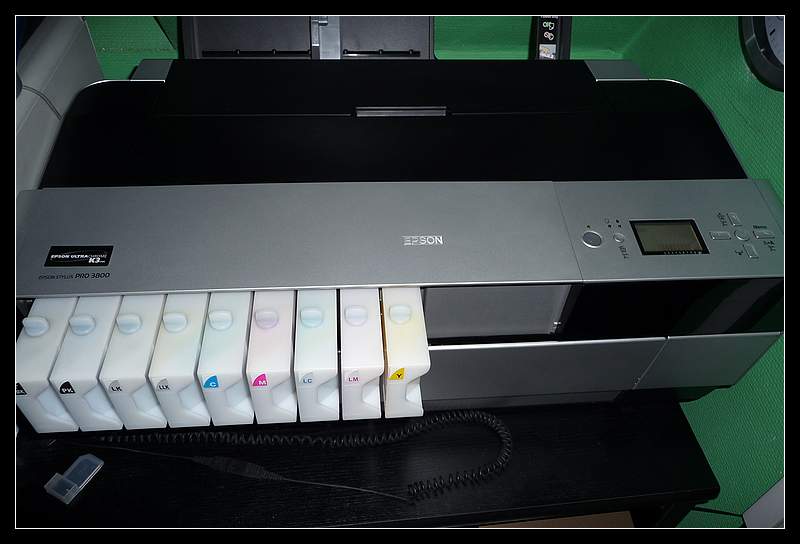
I quickly installed the previous Inkrepublic I-refill system back into the printer. Note the white ink cover key on the left of the table of the Inkjetfly system, now removed from the system.
Nothing wrong with this system: system is working like it has been previously before installing the Inkjetfly Big Foot system. No problem with the OEM chip, so there is something wrong with one or more of the Big Foot tuning chips/dummy chips.
The next day I tried to figure out where the problem lays and I discovered the PK cartridge tuning chip did not make contact with the PK OEM chip. There was a manufacturer error in the cradle of the tuning chip, that seems to fit not optimally on the OEM chip. I could feel the tuning chip cradle was jumping back away from the OEM chip. I had to put tape between the cradle and the cartridge to firmly seat the cradle onto the cartridge and thus the OEM chip. Quite annoying, but fortunately I figured out the exact problem of the error message on my printer.
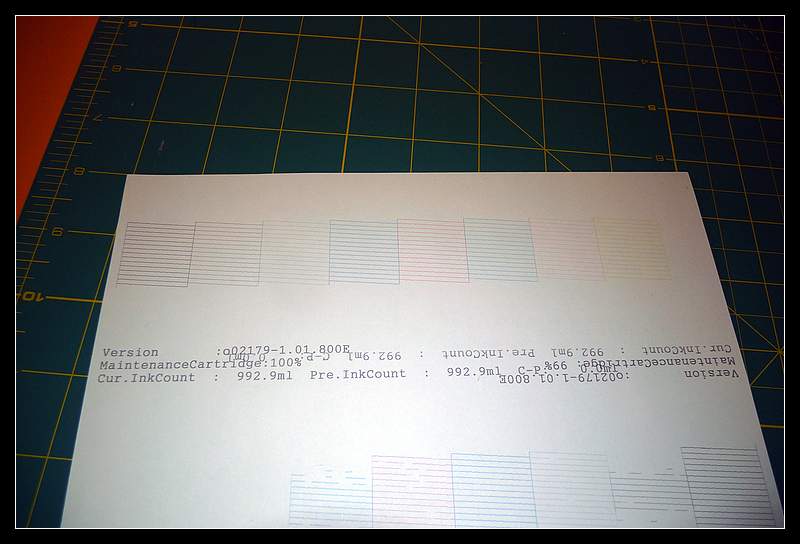
Now with the last technical problem solved I tried to print and first of all a nozzle check:
Well it looks good, but it is still the previous ink inside the tubing system. So performed a cleaning cycle to flush the tubing system and having it replaced with the Inkjetfly ink. The manual states one has to execute several cleaning cycles to flush the system. So I did:
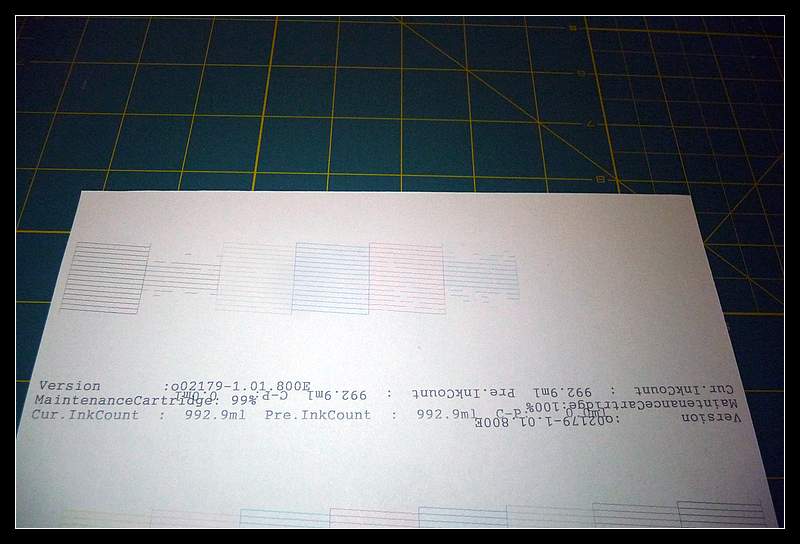
Hmmm, there is a bit of air pushed inside the system as you can see.
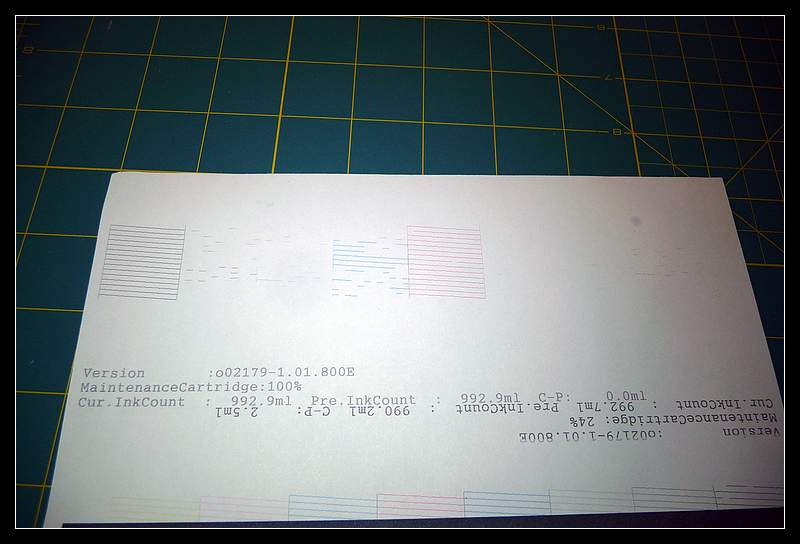
Above picture: after a second cleaning cycle. It actually got worse. How many cleaning cycles should be performed to flush away previous ink and air from the system ??? Note: the maintenance cartridge is back to 100 %, as I removed it to replace the absorption material.
At this particular time, this topic has been posted I already run 9-10 cleaning cycles with 15-30 minutes in between to have the ink settled (so air pockets can escape from the surface), but still no 100 % clean nozzle check print. Rather dissappointing: the manual states a few cleaning cycles to remove the air from the tubing system. I will power of the printer and see if the situation will improve tomorrow. I did not need so much cleaning cycles on the Inkrepublic I-refill system the first time to remove the air trapped inside the printer (up to 3 times at most, gradually improving). Now when 1 or 2 colours seem to improve others seem to get worse after a cleaning, even with 15-30 minutes in between to rest. Hopefully this will go away tomorrow.
I have been testing the system since yesterday evening and this morning 9.00 AM till now 3.00 PM local time. So the chip problem of the PK tuning chip has been solved by using tape and now see if the trapped air will be gone tomorrow. The good thing is the chips will always stay at 100 % and the resettable maintenance chip will auto reset everytime you remove it from the system. Another positive aspect of this system you only need 2 OEM chips to have the system functioning: PK and MB.