lin,...I think you will be please to hear that I have found the solution to your problem. My last post was correct and I think that Grandad35 mentioned it first but it is still the same problem.
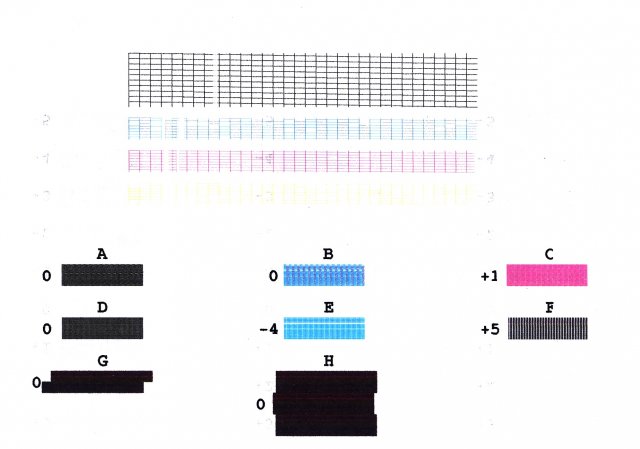
I have had another printer waiting for repair for almost 6 months,..I've had so much to do I just couldn't get around to working on it. Anyway I finally took it apart and cleaned it and put it all back together. This is not the easist as this is one of the Canon F30 multifunction printers and to take one of these apart is a lot of work. Anyway, after putting it back together and cleaning the printhead and adding new ink, I powered it on and ran a cleaning cycle and then printed a nozzle check pattern. Here is a copy of that picture.
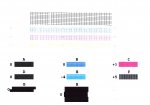
If you look close you will see several things. First there is a Horizontal shift in the black bars, which is the same problem you posted as Vertical Alignment. It looks just like your pictures. The second thing you will notice is that there is a complete dropout or void of black print about 1' in from the left on the Black matrix pattern.
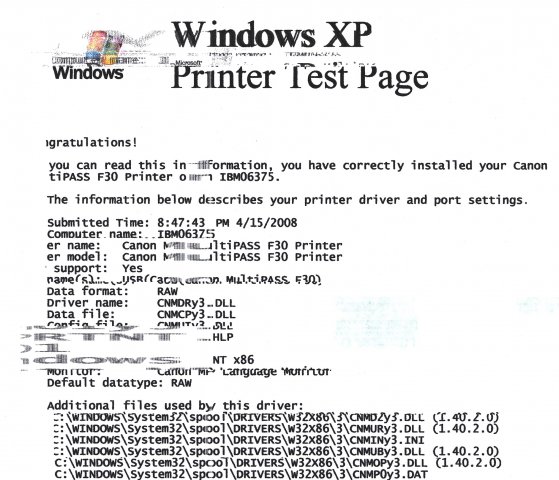
I also printed a standard Windows Test print and here is the result of that print.
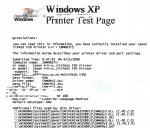
Look close at this print and you will see "Smear" in the very top line and in the 1st sentence as well as have way down. You should also note that every other line does not end in the correct place. So it seems like there is more than one problem.
I openned up the cover of the printer and inspected the timing strip and the belt. The belt looked fine and at first look the timing strip looked OK also. But then I used a light and tilted the timing strip and I found the problem. There were several sections of very transparent grease of finger prints along the timing strip. When I initially clean the printer, I did not see these at all. This is another lession learned. From now on I will know how to do a much better job in examining the timing strip.
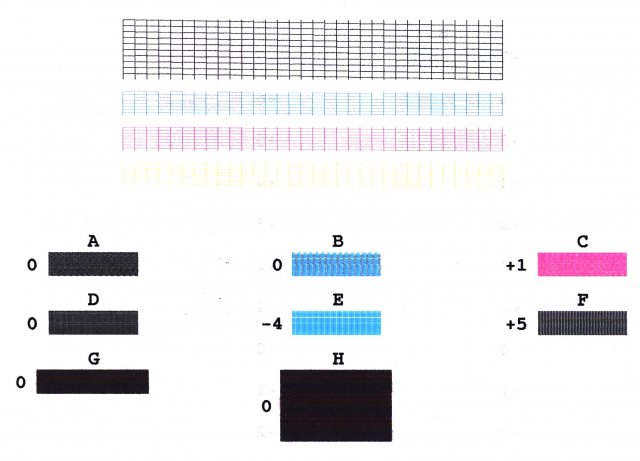
As I have mentioned before, and problem with the correct detection of any timing mark will cause some kind of print problem. There were seveal spots of very bad grease "Film" on the strip. If you held it flat they were no visible at all. If you can tilt them back and shine a bright light through the strip you can see the grease or smears. Now it is very difficult to do a good job of cleaning the strip for a F30 because when the cover is open there is only about 6-7" access. Anyway, I used a "Q" tip wet with Windex and gently wiped the timing strip, front and back, for as long as I could reach. Each time I moved the Carriage out of the way. I finished by drying the strip with a soft tissue. In doing all of this you have to be very carefull or the timing strip will come loose from the attachement at either end. Once I got it done, I printed several more test prints and here is the nozzle check.

As you can see the black bars are not back in the correct position, and the gap in the Black matrix print is gone. The printhead still has many clogged jets in the Cyan and magenta but that wil get fixed later. Next I printed the "Alignment test" which is shown next.

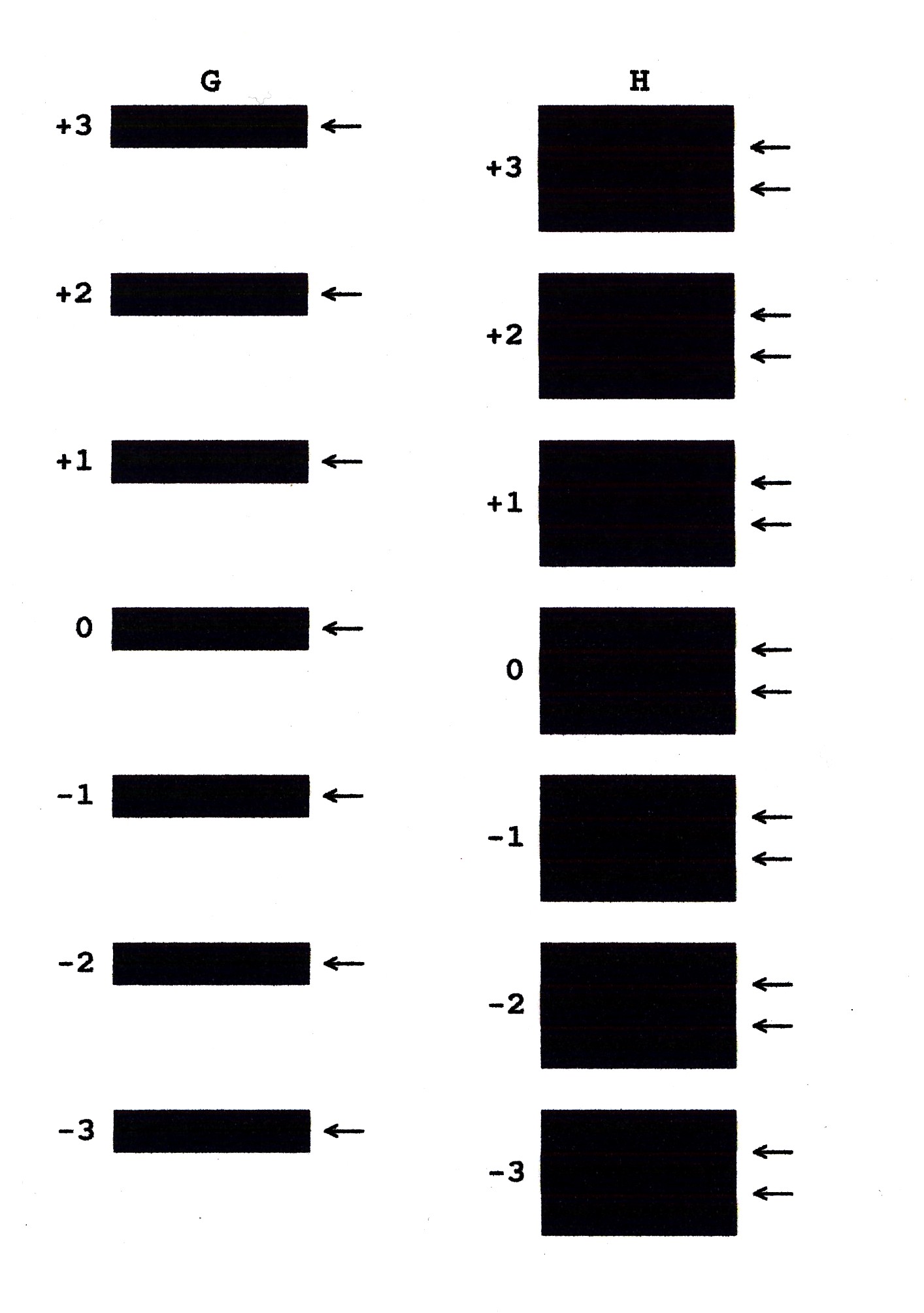
As you can see, the alignment is pretty good. However, if you look really close you will see there is still some very small shift in the printing. It is probably another very small smear somewhere on the timing strip that I could not reach. I'm going to have to take the printer apart again and do it right this time. Anyway here is another Windows test print to show how the initial problems were fixed. Like I said there is still some very small timing but it is hard to see. I was able to blow the image up by 500% and it is easy to see at that magnification.
Lin,... I hope you're still watching these posts as I am confident that you can fix your printer. The F30 I did is so close to the MP730 but still the F30 is easier because most all of the electronics card is in the back and does not have to be removed. Plus the cables are back there and again that makes it much easier. One peice of good news for you is that now you know what to look for. You also don't have to remove the printer asm out of the base which is another job you don't have to do. Once you get the middle cover off of the printer you will have all the access you need to remove the timing strip and clean it carefully.
I guess I was lucky in a way to have a printer that had the same problem, and lucky to fix it so fast. It took 3 minutes.